Architecture
Simple Page is a markdown-first publishing system built on ENS, IPFS, and Ethereum.
Overview
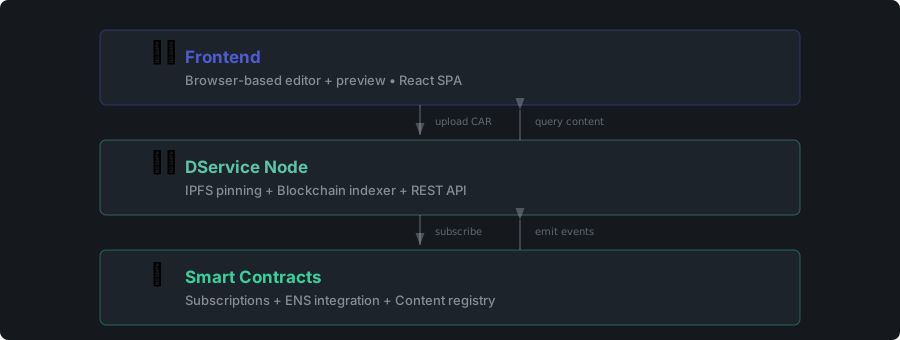
Simple Page has three main layers:
| Layer | Role |
|---|---|
| Smart contracts | Track Simple Page subscriptions as NFTs and calculate subscription fees. |
| Browser frontend | Edits markdown, manages files/settings, stages content, reviews drafts, and publishes ENS contenthash transactions. |
| Simple Page Node | Pins and stages CARs, indexes Ethereum/ENS events, serves lightweight CARs and raw blocks, and syncs off-chain refs. |
The permanent public pointer is always the ENS contenthash. Every publish changes that pointer on-chain to a new IPFS CID.
Browser Publish Flow
Edit markdown and files
-> build a new IPFS root locally
-> upload a CAR to a Simple Page Node
-> sign an ENS contenthash transaction
-> node indexes the event and finalizes the pin
The browser editor uses the @simplepg/repo package as the canonical content engine. It builds markdown pages, HTML pages, settings, theme CSS, manifests, RSS, sidebar navigation, and history links into one UnixFS root.
CLI Draft Flow
Clone or create local markdown repo
-> edit files locally
-> authorize CLI agent with the ENS owner wallet
-> push signed off-chain draft
-> review draft in browser
-> owner publishes selected CID on ENS
This separates contribution from publication. Agents can prepare drafts without holding the ENS owner key.
Static Site Flow
Build a static site locally
-> push output directory as a raw signed draft
-> preview CID in browser
-> owner publishes selected CID on ENS
Static builds use the same Node and ENS contenthash publication path, but they do not use Simple Page markdown rendering.
Read Flow
Visitor opens yourname.eth.link
-> gateway resolves ENS contenthash
-> gateway serves IPFS content
-> Simple Page frontend enhances the page when JavaScript is available
Published pages include static HTML, so content can render before the app hydrates.
Data Stored In A Published Root
Important paths in a Simple Page root include:
| Path | Purpose |
|---|---|
index.md, */index.md |
Markdown source for pages. |
index.html, */index.html |
Rendered HTML for visitors. |
_files/ |
Uploaded files and generated avatar/favicon artifacts. |
_prev/0/ |
Previous published root, recursively preserving history. |
_template.html |
HTML template used to render pages. |
settings.json |
Site settings such as themes, search, and edit button style. |
theme.css |
Generated theme CSS from settings. |
manifest.json, manifest.webmanifest |
Web app metadata and icons. |
rss.xml |
Generated RSS feed when pages opt in. |
sidenav.json |
Generated left-sidebar navigation data. |
_redirects |
Gateway redirects, including /feed to /rss.xml. |
Service Discovery
Frontend and CLI clients discover Simple Page Nodes through the dservice text record on new.simplepage.eth. Multiple endpoints can be listed. Clients randomize endpoint order and try available nodes.
Advanced users can override endpoints with query parameters:
?ds-new.simplepage.eth=https://your-node.example
?ds-rpc-1=https://your-mainnet-rpc.example
?ds-rpc-11155111=https://your-sepolia-rpc.example
The main editor currently supports RPC overrides for mainnet, Sepolia, and local development.
Next
- Components - what each package and contract does.
- Protocol - how content moves through the network.
- API - Node endpoints for content, refs, capabilities, and history.